Concrete Pad Installation in Phoenix, AZ
RV pads, shed slabs, hot tub bases, equipment pads and workshop floors — poured flat, reinforced for the load, and built to stay level through Arizona's soil movement.
- Free Estimates
- Family-Owned
- Hablamos Español
What a Concrete Pad Is For
A pad is a flat, load-bearing slab, and its whole job is to stay flat. That makes base prep the most important part of the job. A pad poured on soft or poorly compacted ground will settle, crack, and pull away from whatever sits on it — which is exactly when an RV leans, a shed door stops closing, or a hot tub starts stressing.
We build pads for RV and trailer parking, storage sheds, hot tubs and spas, air conditioning and pool equipment, patio extensions, and workshop or garage floors. Each one gets sized and reinforced for what's actually going on top of it.
How We Pour a Pad That Stays Flat
We start by looking at the site — the slope, the drainage, and how much weight the pad needs to carry. An RV pad needs a deeper, more heavily reinforced slab than a pad for a small storage shed, and pricing reflects that.
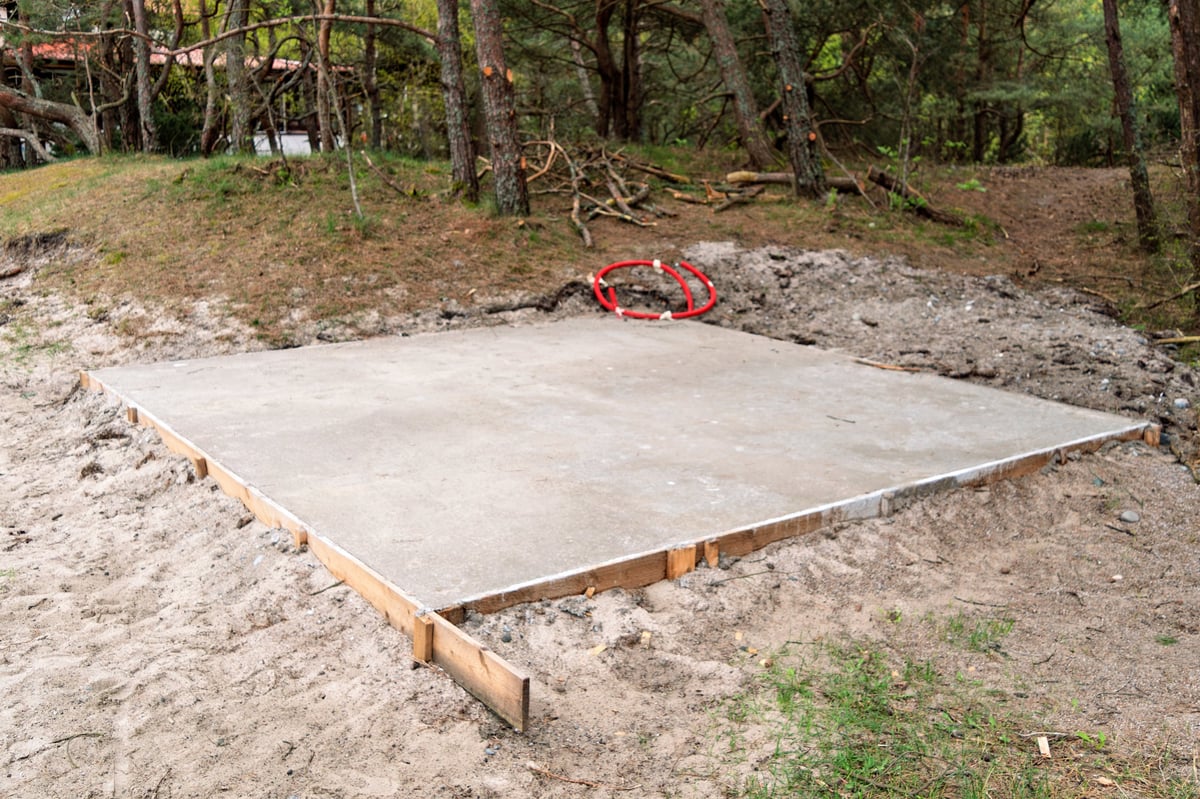
From there we excavate, compact the subgrade, and build a base that won't move. We form the slab to your dimensions, add reinforcement appropriate to the load, pour, screed and finish. Anything that needs to be embedded — conduit, anchor bolts, drain lines, or a thickened edge where a structure meets the pad — gets planned into the pour instead of drilled in afterward.
Sizing, Thickness and Reinforcement
Residential pads typically run four to six inches thick with mesh or rebar. Heavier uses — RV pads, vehicle parking, equipment — call for more. We don't guess at this; the slab gets built for what you told us is going on it.
If you're not sure what your project needs, tell us what you're putting on the pad and roughly how heavy it is. We'll recommend the thickness and reinforcement and explain why, so you're not overpaying for a slab you don't need or underbuilding one that will fail.
Arizona Ground, Arizona Pads
Desert soil expands and contracts with moisture, and monsoon season swings that hard. Pads poured without a proper base or reinforcement tend to move and crack within a few seasons. We build for that from the ground up.
We install concrete pads throughout Phoenix, Scottsdale, Glendale, Mesa, Tempe, Goodyear, Avondale, Buckeye, Tolleson and Cave Creek — and we're a local, family-owned crew, so we're around if you ever have questions about the work.
Why Phoenix Homeowners Choose Us
Poured for the Load
Thickness and reinforcement chosen for what actually sits on the pad — an RV slab and a shed slab are not the same job.
Flat Means Flat
Careful subgrade prep and screeding so your pad drains correctly and whatever sits on it stays level.
Embedded Details Planned In
Conduit, anchors and drains cast into the pour instead of drilled and patched afterward.
One Family-Owned Crew
Excavation, base prep, forming and finishing handled start to finish by our own team.
Free Estimates
Tell us the size and what it's for, and we'll give you a clear number with no obligation. Estimados gratis.
Hablamos Español
Full service in English or Spanish, from the first phone call through the finished pad.
Common Questions
It depends entirely on the load. Light use like a small shed is usually four inches; RV pads, vehicle parking and equipment pads need more. Tell us what's going on it and we'll recommend the right thickness.
Yes. We'll prep and form the new slab so it ties into or abuts your existing concrete cleanly, and we'll talk through how the joint and color will read once it's cured.
It depends on the size and what it's supporting, and rules vary by city. We can talk through what applies to your project during the estimate.
Concrete needs to cure before it takes weight. We'll give you a specific timeline based on your slab and the weather once it's poured.
Ready for a free estimate?
Call, text or send the form — we'll come out, look at the space and give you a straight answer, free of charge. Hablamos Español.